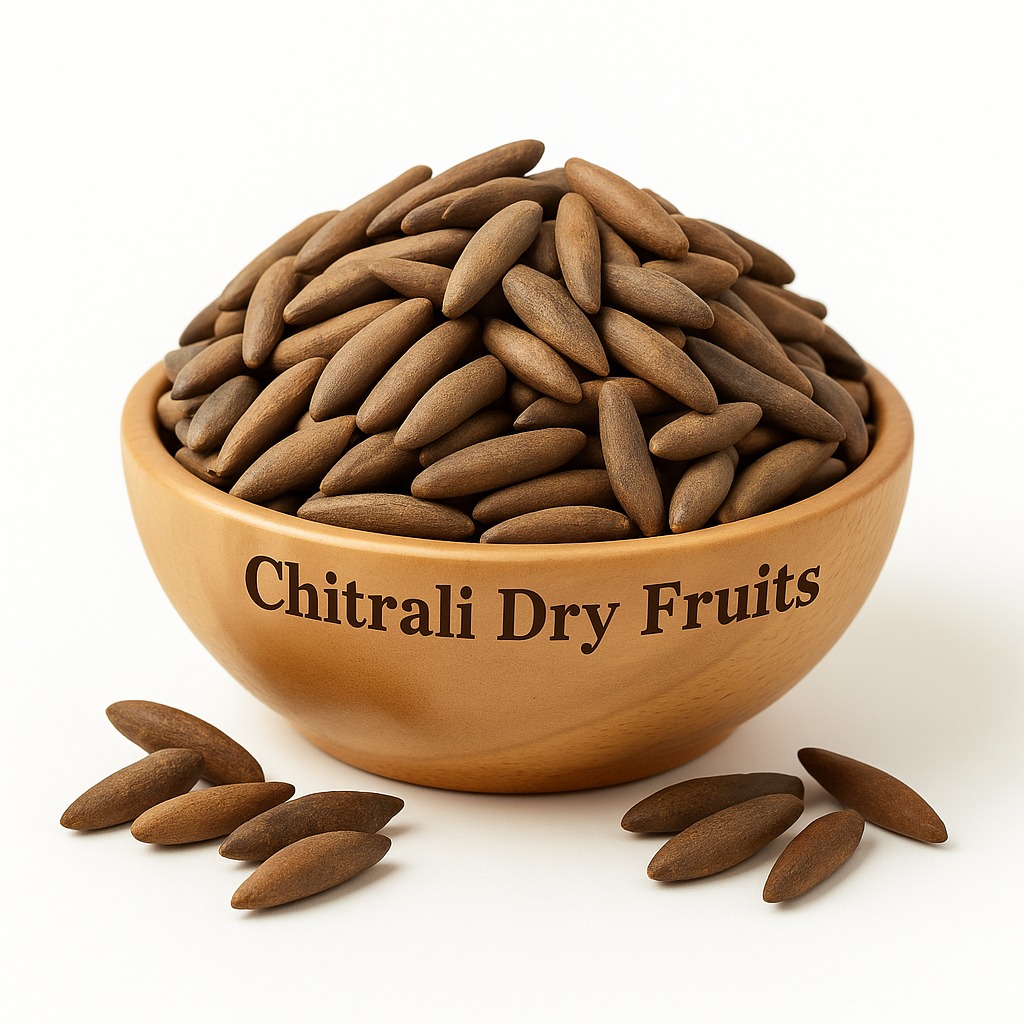
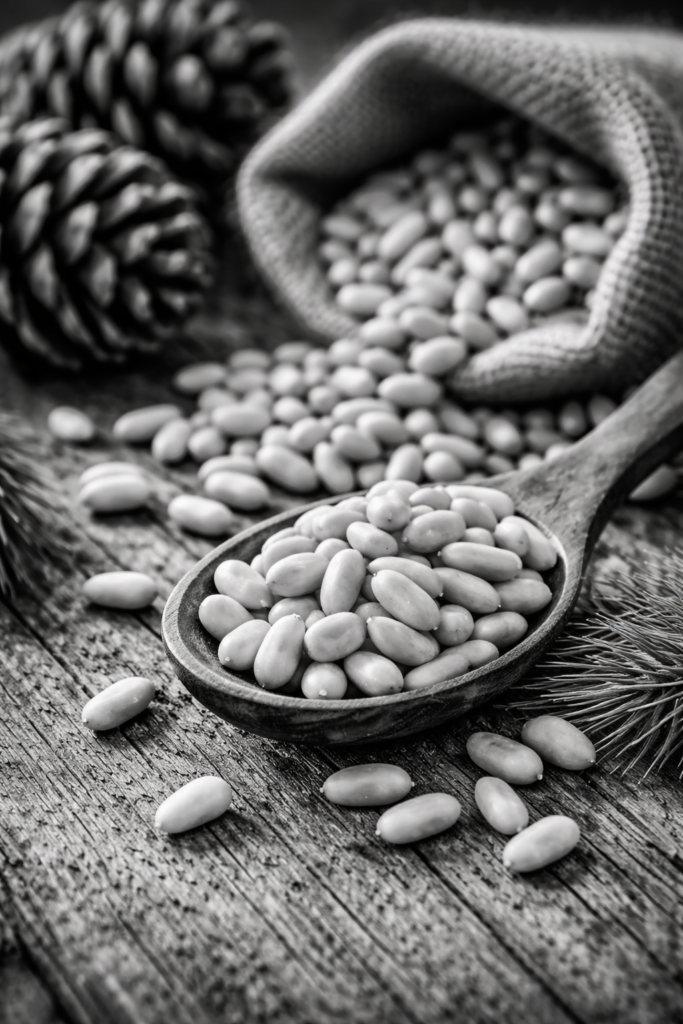
Pine nuts are edible seeds obtained from certain species of pine trees belonging to the genus Pinus in the family Pinaceae. They have been consumed for thousands of years and were an important food source for ancient civilizations, including the Romans, Greeks, and indigenous mountain communities of Asia and the Americas. The use of pine nuts is deeply rooted in traditional diets due to their high energy and nutritional value. Historically, they were gathered from wild pine forests, especially in mountainous regions, where they played a vital role in local cuisines and cultural practices.Here is a refined, clean product-style version
written specifically for pine nuts: Pine nuts are small, ivory-colored seeds prized for their rich, buttery flavor and delicate natural sweetness. Harvested from pine cones, they grow in high-altitude, mountainous, and cold regions around the world. Pine nuts are mainly cultivated in China, Russia, Pakistan—particularly in the Chitral and Gilgit-Baltistan regions—Afghanistan, and parts of the Mediterranean. The seeds develop inside pine cones, which are traditionally collected, sun-dried, and carefully processed to release the edible nuts